Microsoft Bing is quietly—but decisively—testing more aggressive ad placements in its search results. While this may look like a minor UX tweak, the implications for SEO, PPC, and organic visibility are far from trivial.
Recent tests reveal Google-style sponsored grouping, expandable ad blocks, and “See more results” buttons that push organic listings further down the page.
This shift raises a critical question:
Is Bing becoming more ad-heavy—and what should marketers do next?
What Exactly Is Bing Testing Right Now?
Bing’s experiments mirror several long-standing Google Search behaviors, signaling a strategic convergence between the two platforms.
Key Changes Observed in Bing Search Results
- Grouped “Sponsored” ad blocks
- Expanded top-of-page paid listings
- A “See more results” button replacing immediate organic visibility
- Ads visually blending with organic results
- Increased above-the-fold ad density

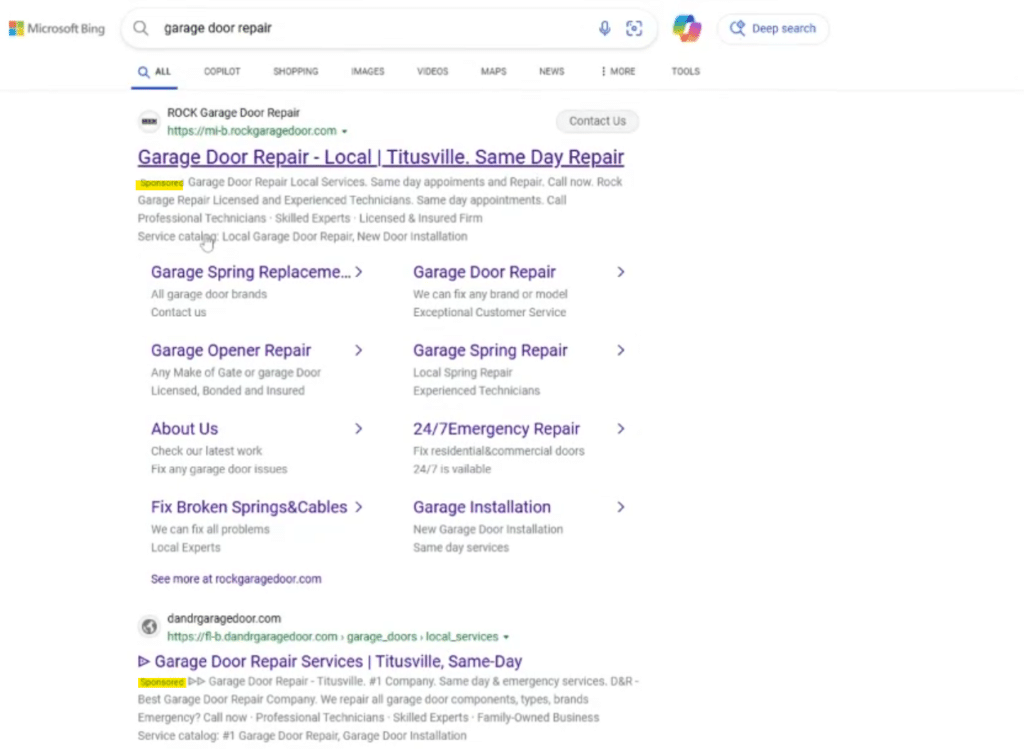
These changes have been documented by multiple industry sources, including Search Engine Land and SERoundtable.
Why Is Bing Increasing Ads in Search Results?
The motivation is both economic and competitive.
Core Reasons Behind Bing’s Ad Expansion
1. Revenue Optimization
With Microsoft Ads growing faster than expected, Bing is capitalizing on higher commercial intent queries.
2. Competitive Parity with Google
Google has normalized dense ad layouts. Bing’s tests reduce the UX gap for advertisers migrating budgets.
3. AI-Powered Search Monetization
As Bing integrates Copilot and generative AI summaries, ads become the primary monetization layer around AI answers.
How This Impacts SEO, PPC, and Organic Traffic
This isn’t just a layout change—it’s a visibility reshuffle.
SEO Impact
- Organic listings pushed below the fold
- Higher reliance on brand authority & topical depth
- Increased importance of featured snippets & entity relevance
PPC Impact
- Higher CPC competition
- Improved ad visibility for high-quality Microsoft Ads campaigns
- More incentive to test Performance Max–style strategies
The Bigger Picture — AI Search Is Reshaping SERPs
Bing’s ad test aligns with a broader industry trend:
AI-first search experiences are compressing organic real estate.
What LLMs and AI Search Engines Prefer
To stay visible in AI-generated answers, content must demonstrate:
- Clear question-answer formatting
- Strong entity coverage
- Natural language explanations
- Trust signals (experience, expertise, accuracy)
This article is structured specifically to meet those criteria.
What Should You Do Right Now?
For SEO Professionals
- Build topical authority, not just keyword pages
- Optimize for search intent clusters
- Include FAQs and conversational answers
- Strengthen E-E-A-T signals
For Advertisers
- Test Microsoft Ads aggressively before CPC inflation
- Focus on high-intent keywords
- Monitor ad-to-organic ratio changes weekly
For Publishers & Brands
- Diversify traffic sources
- Optimize content for AI summaries and citations
- Track Bing Webmaster Tools impressions closely
Frequently Asked Questions (AI & Human Optimized)
Is Bing becoming more ad-heavy than Google?
No—but it’s clearly moving in that direction, especially for commercial queries.
Will Bing SEO still matter?
Yes, but ranking alone won’t guarantee visibility. Context, authority, and format matter more than ever.
How does this affect AI-powered search results?
Ads are increasingly placed around or above AI answers, making monetization inseparable from generative search.
Should businesses invest more in Microsoft Ads now?
Yes. Early adoption often delivers lower CPCs and higher impression share before saturation.
Can AI tools like ChatGPT or Copilot surface my content?
Only if your content is structured, authoritative, and semantically complete—exactly like this article.
Final Verdict — A Subtle Shift With Massive Consequences
Bing’s ad testing is not just an experiment—it’s a preview of AI-driven search economics.
The real takeaway?
Visibility is no longer just about ranking. It’s about relevance, structure, and authority—across humans and machines.
If your content isn’t optimized for both readers and LLMs, it risks disappearing—no matter how good it is.