
In today’s competitive digital advertising landscape, targeted visibility — not sheer traffic — drives profitable campaigns. That’s where long tail keywords become one of the smartest strategies in your Google Ads playbook. By focusing on specific, intent-rich search terms, you can reduce competition, improve conversion rates, enhance relevancy, and maximize your return on ad spend (ROAS). This article explores how long tail keyword strategies work, why they matter, and how to harness their full potential in your PPC campaigns.
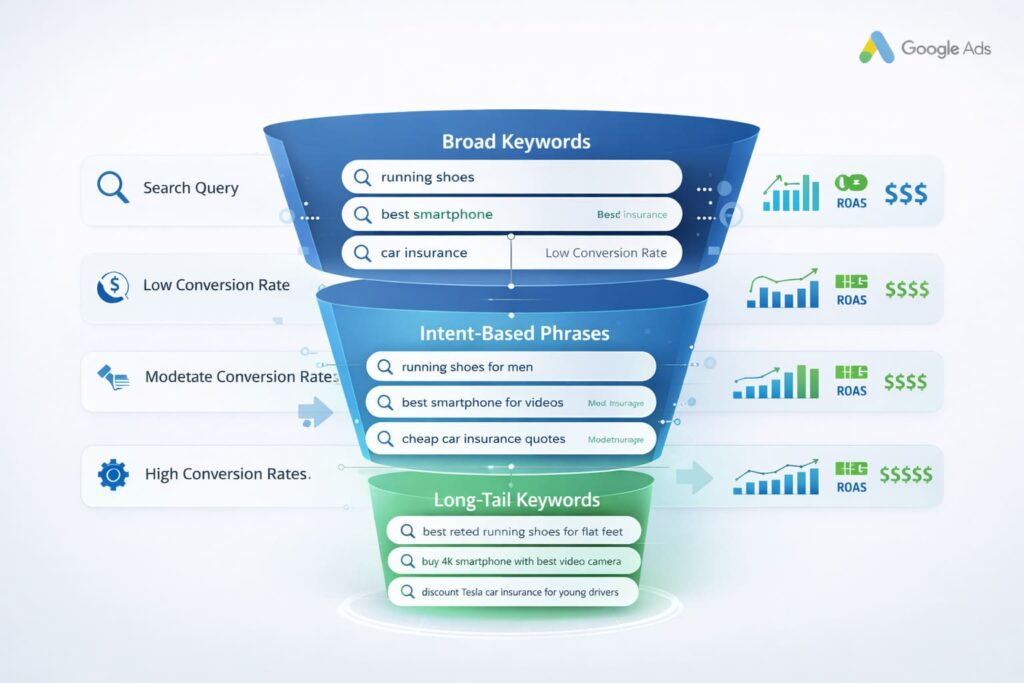
🔍 What Are Long Tail Keywords?
Long tail keywords are longer, more descriptive search phrases — usually three or more words — that target specific searcher intent. For example:
- Short-tail: “CRM software”
- Long-tail: “CRM software for small B2B sales teams”
While they may have lower individual search volume, long tail keywords deliver higher relevance and stronger conversion potential, making them extremely valuable in Google Ads campaigns.
🎯 Why Focus on Long Tail Keywords in Google Ads
Below are key semantic clusters that explain their strategic importance:
✅ 1. Lower Competition, Lower CPC
Long tail keywords attract fewer advertisers bidding for the same phrase, which reduces competition and cost-per-click (CPC). This means you can stretch your budget further and compete effectively against larger advertisers who dominate broad keyword markets.
Benefits:
- Lower CPC
- Less bidding pressure
- More impressions for your budget
This cost advantage makes long tail strategies especially effective for small or niche businesses with limited budgets.
🎯 2. Higher Intent = Higher Conversions
Searchers using long tail phrases typically have clearer purchase intent — they know what they want and are further down the funnel. For example:
Someone searching “best CRM for small tech startups” is much closer to conversion than someone searching “CRM software.”
This higher intent means long tail keywords often lead to:
- Higher click-through rates (CTR)
- Better conversion rates
- More qualified leads for your offer
📈 3. Improved Ad Relevance and Quality Score
Google’s Ad Rank algorithm rewards relevance. When your keyword matches a user’s search precisely, your ads appear more relevant — which can:
- Increase CTR
- Boost Quality Score
- Reduce effective CPC
- Improve ad placement
Long tail keywords naturally align better with user intent, elevating your campaign’s overall performance.
🎯 4. Enhanced Targeting for Specific Audiences
Long tail keywords allow for highly targeted audience segmentation. Instead of broadly targeting “shoes,” you could target:
- “Lightweight running shoes for flat feet”
- “Affordable vegan leather sneakers for women”
Targeting such specific terms means your ads speak directly to highly qualified searchers and reduce irrelevant clicks — saving budget and boosting conversions.
🔧 Tools & Techniques for Identifying Long Tail Keywords
Effective long tail keyword research relies on tapping into real search behavior. Expert-recommended methods include:
- Google Keyword Planner: Reveals related and detailed keyword suggestions
- Search Console: Shows actual search queries that drive traffic
- Autocomplete & “People Also Ask”: Reveals real-world search patterns
- Forums & Social Platforms (Reddit, niche communities): Rich sources of user language and intent
These tools help you discover phrases that users already use — increasing your campaign relevance naturally.
🧠 Structuring Your Campaign for Success
To maximize impact, consider these campaign-level strategies:
📌 1. Organize Tight Ad Groups
Group similar long tail keywords together instead of mixing broad topics. This improves relevancy and tracking.
✍️ 2. Tailor Your Ad Copy
Match your headline and description to the specific terms your audience is searching for — this boosts CTR and engagement.
🌐 3. Optimize Landing Pages
Send clicks to pages that are perfectly tailored to the long tail query instead of generic landing pages.
💡 Balancing Short and Long Tail Keywords
A smart campaign isn’t all long tail — it’s balanced. While short-tail keywords can drive broader awareness, long tail keywords help convert ready-to-buy audiences. Combining both ensures you fill the top of the funnel while still converting quality prospects towards the bottom.
📊 Conclusion: Why Long Tail Strategy Matters
In Google Ads, chasing high volume isn’t always the best path. Long tail keywords offer a strategic edge that leads to:
- Less competition
- Lower CPC
- Higher intent clicks
- Improved conversions
- Better budget utilization
For marketers who want real results — especially in niche or competitive industries — a well-structured long tail approach isn’t optional, it’s essential.