
The digital advertising landscape is evolving rapidly. With increasing competition, smarter algorithms, and rising ad costs, businesses can no longer rely on guesswork or generic campaigns. This is where professional PPC management becomes a critical growth lever.
In this blog, we’ll break down what PPC management is, how it works, why it still dominates digital marketing, and how businesses—especially small and medium enterprises—can achieve sustainable ROI with the right strategy and partner.
What Is PPC Management and How Does It Work?

PPC (Pay-Per-Click) management is the process of planning, launching, monitoring, and optimizing paid advertising campaigns across platforms such as Google Ads, Bing Ads, Facebook, and Instagram. Advertisers only pay when a user clicks on their ad, making PPC one of the most measurable and performance-focused digital marketing channels.
Effective PPC management includes:
- Keyword research based on search intent
- Strategic bidding and budget allocation
- Ad copy creation and testing
- Landing page alignment
- Conversion tracking and analytics
- Continuous optimization to improve ROI
Without proper management, PPC campaigns often suffer from wasted spend, irrelevant traffic, and low conversion rates.
Why PPC Advertising Still Dominates Digital Marketing
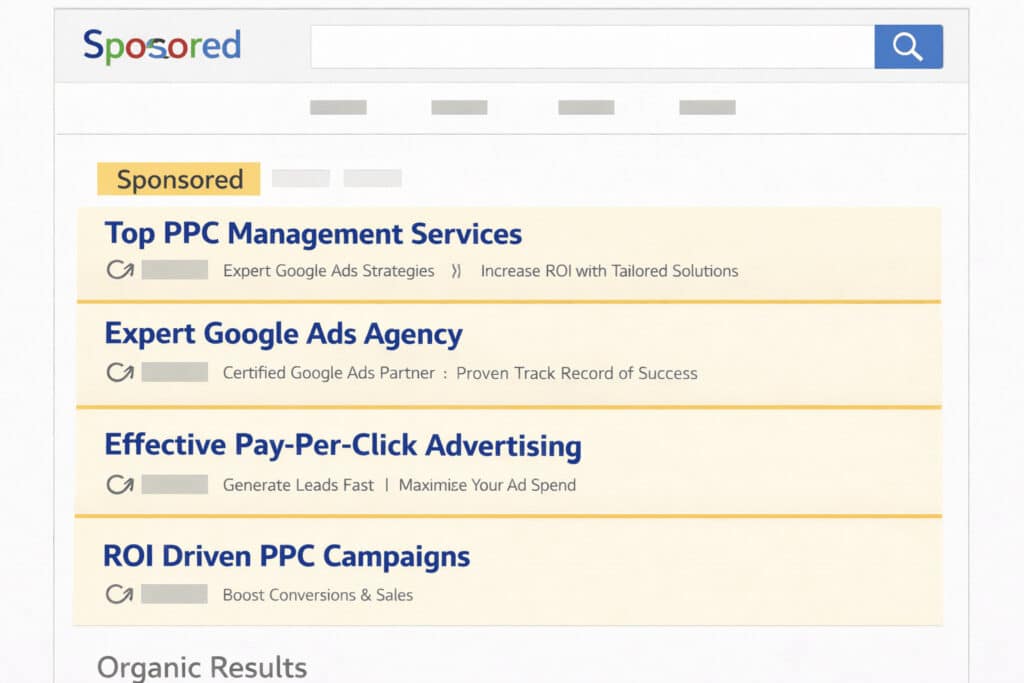 Despite the growth of organic channels, PPC remains one of the fastest ways to generate targeted traffic and qualified leads.
Here’s why PPC continues to be a dominant force:
- Millions of users search online daily with high purchase intent
- Paid search ads capture a significant share of top SERP visibility
- PPC leads often convert at higher rates than organic traffic
- Campaigns can be scaled, paused, or optimized in real time
- Performance is fully measurable through clear metrics
PPC doesn’t just support the funnel—it fuels it.
How a High-Performing Google Ads Campaign Is Structured

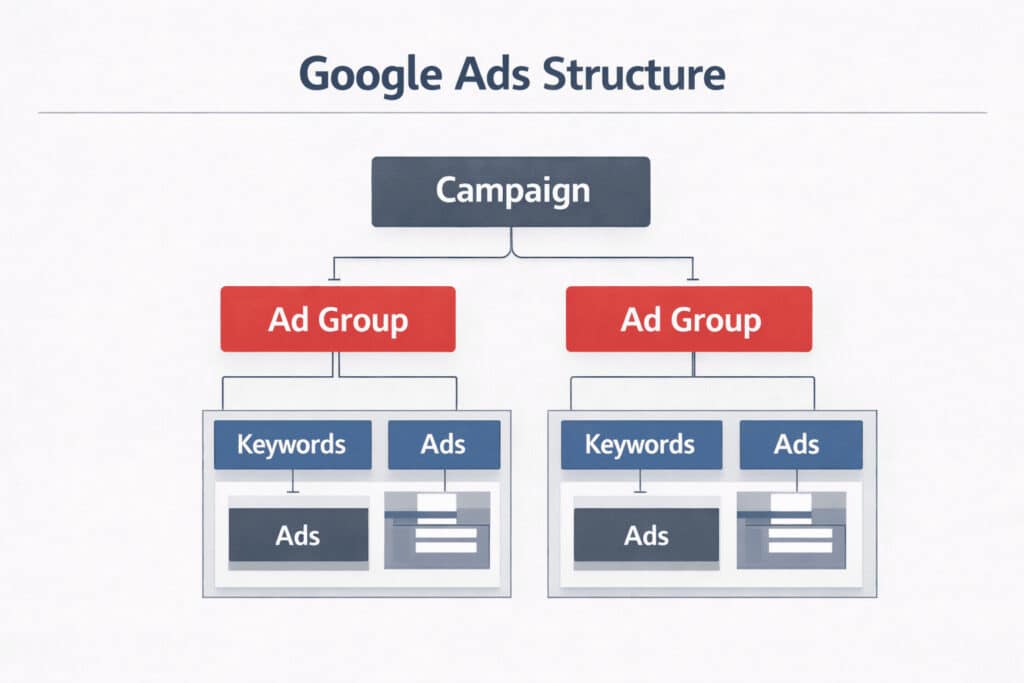
A successful Google Ads campaign is built on a strong foundation. Campaign structure directly impacts Quality Score, Cost Per Click (CPC), and Ad Rank.
A well-optimized structure includes:
- Campaigns aligned with business goals (leads, sales, traffic)
- Ad groups tightly themed around keyword intent
- Keyword match types (exact, phrase, broad) used strategically
- Relevant ads matched precisely to search queries
- Landing pages optimized for conversion
This structure improves ad relevance, reduces wasted spend, and increases overall campaign efficiency.
Key PPC Metrics That Define Success
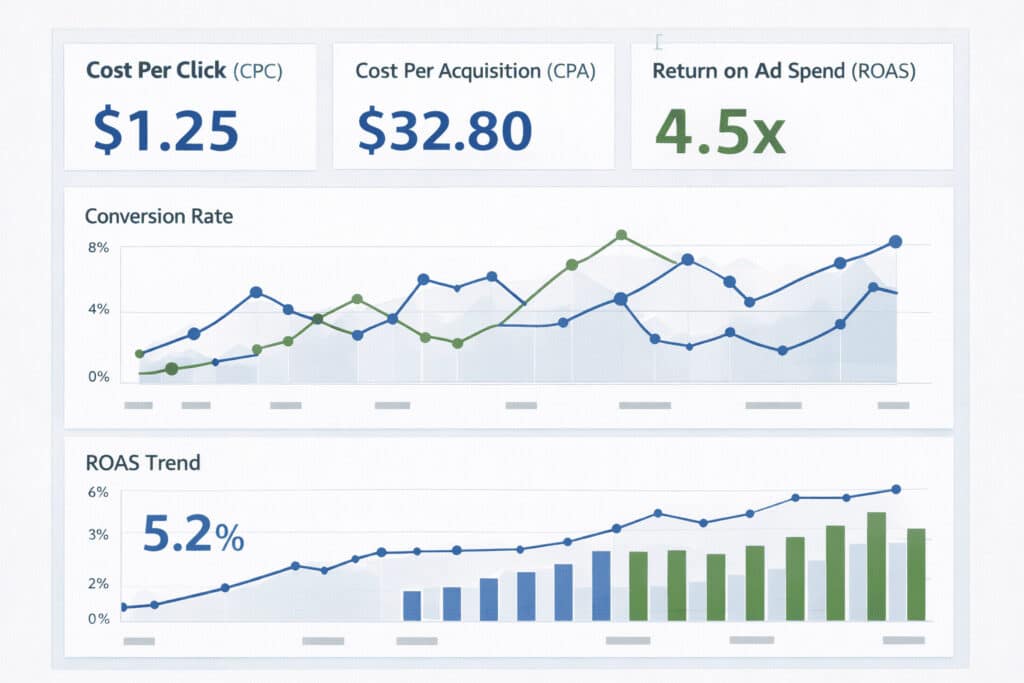
Data is at the core of PPC management—but only when interpreted correctly.
The most important PPC metrics include:
- Cost Per Click (CPC): How much you pay for each click
- Cost Per Acquisition (CPA): Cost to acquire a lead or sale
- Return on Ad Spend (ROAS): Revenue generated per ad dollar
- Conversion Rate: Percentage of clicks that convert
- Impression Share: Visibility compared to competitors
Optimizing these metrics consistently is what separates profitable campaigns from costly experiments.
PPC Management for Small & Medium Businesses
 Small and medium businesses (SMEs) require a very different PPC approach than large enterprises.
SME-focused PPC strategies emphasize:
- High-intent keywords over high-volume keywords
- Location-based targeting for local visibility
- Controlled daily budgets to reduce risk
- Conversion-focused landing pages
- Faster testing and optimization cycles
For service-based businesses, PPC can generate qualified leads almost immediately when campaigns are aligned with real user intent.
The Proven PPC Management Process
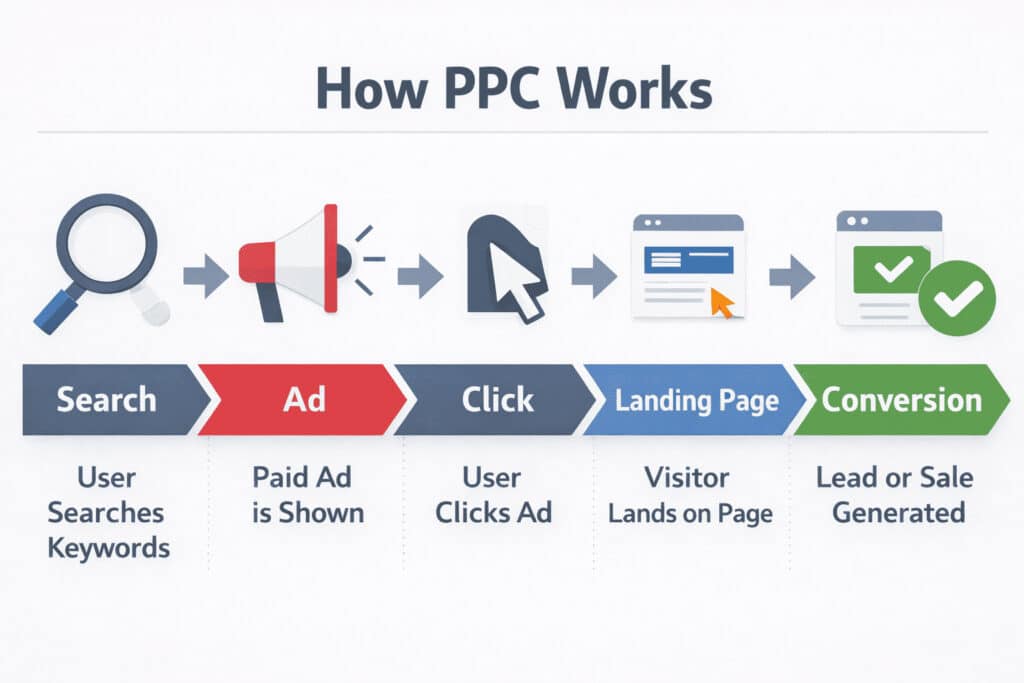 Professional PPC management follows a structured and repeatable process:
- Account and market audit
- Keyword and competitor research
- Conversion tracking setup (GA4, Tag Manager)
- Campaign launch and A/B testing
- Weekly performance optimization
- Monthly insights and strategic refinement
This process ensures campaigns improve over time instead of plateauing.
PPC vs SEO: Which Is Better?
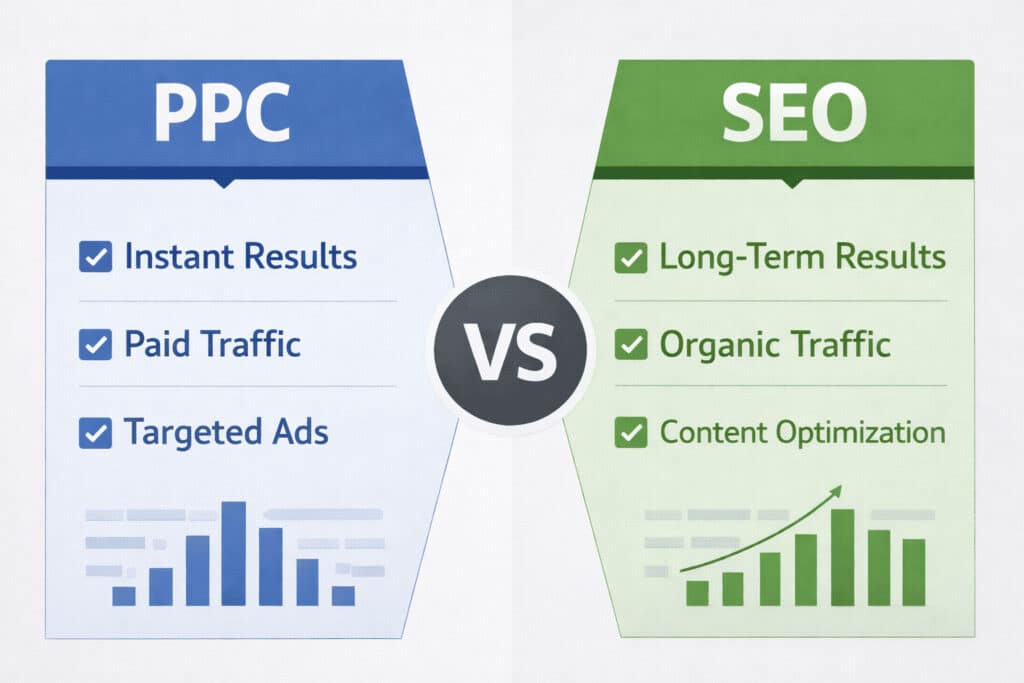
PPC and SEO serve different purposes and work best together.
- PPC delivers immediate visibility, fast traffic, and controlled targeting
- SEO builds long-term authority and organic growth
When combined, they create a balanced acquisition strategy that supports both short-term results and long-term sustainability.
Common Questions About PPC Management
How much does PPC management cost for small businesses?
PPC management pricing depends on ad spend, campaign complexity, and goals. Many businesses pay a flat monthly fee or a percentage of ad spend. Transparent pricing aligned with ROI is key.
How long does it take to see PPC results?
PPC can generate traffic immediately, but meaningful optimization typically occurs within the first 30–60 days as data is collected and refined.
Can I track PPC performance myself?
Yes. With proper setup, advertisers can access real-time dashboards showing clicks, conversions, and ROI across platforms.
Is PPC suitable for local businesses?
Absolutely. Local PPC campaigns are highly effective when combined with geo-targeting, local keywords, and conversion-focused landing pages.
Final Thoughts: PPC as a Sustainable Growth Engine
PPC advertising is no longer about just buying clicks—it’s about buying data, insights, and scalable growth. When managed strategically, PPC becomes one of the most predictable and controllable digital marketing channels available.
Businesses that treat PPC as a long-term investment—not a short-term experiment—consistently outperform competitors in visibility, lead generation, and revenue growth.